


Tips for Choosing Durable Knives that Suit Your Needs
Useful tip
25.07.2025

Knives are essential kitchen tools that help you slice and cut a wide variety of ingredients, from vegetables and fruits to meats and fish. In this article, we’ll share tips for choosing durable knives that best suit your needs. Let’s explore!
- Choose knives with a sturdy design
- Select the right knife material
- Pick a knife with a comfortable, well-fitting handle
- Choose the type of knife that fits your usage needs
- Buy from reputable brands
Knives are essential kitchen tools that help you slice and cut a wide variety of ingredients, from vegetables and fruits to meats and fish. In this article, we’ll share tips for choosing durable knives that best suit your needs. Let’s explore!
1. Choose knives with a sturdy design
Choose knives with a solid build where the handle and blade are tightly connected. Screws that attach the blade to the handle should be securely fastened. The handle should be proportionate to the blade, fit comfortably in your hand, and feel stable and secure during use.
Depending on your usage needs, you may prefer different blade thicknesses. Thinner blades are generally sharper, making cutting faster, easier, and less tiring on your wrist.
However, avoid using very thin blades on hard foods, as they can break easily. Look for handles with textured surfaces to improve grip, reduce slipping, and enhance safety while cutting.
 2. Select the right knife material
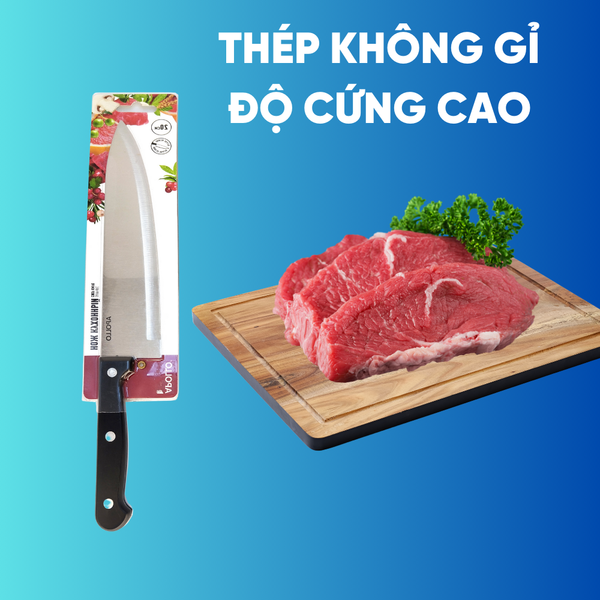
Select the right knife material
Once you’ve identified the type of knife needed, the next important factor is the material, as it directly affects durability and user experience. Common knife materials include:
- Forged steel knives: Made from solid steel with a full-tang design (blade and handle are one piece), reducing the risk of loose handles. However, they may be challenging for beginners to handle efficiently.
- Stamped steel knives: Feature stainless steel blades and plastic or same-material handles, offering better rust resistance. However, their cuts may lack precision and firmness compared to forged knives.
- Carbon steel knives: Equipped with sharp carbon steel blades for smooth cutting and less frequent sharpening. These knives tend to be more expensive.
- Stainless steel (Inox) knives: Use 403 stainless steel blades that are shiny, durable, and lightweight. However, they may dull faster and require more frequent sharpening.
The material of the knife has a significant impact on both usage and longevity, so consider it carefully before purchasing.
3. Pick a knife with a comfortable, well-fitting handle
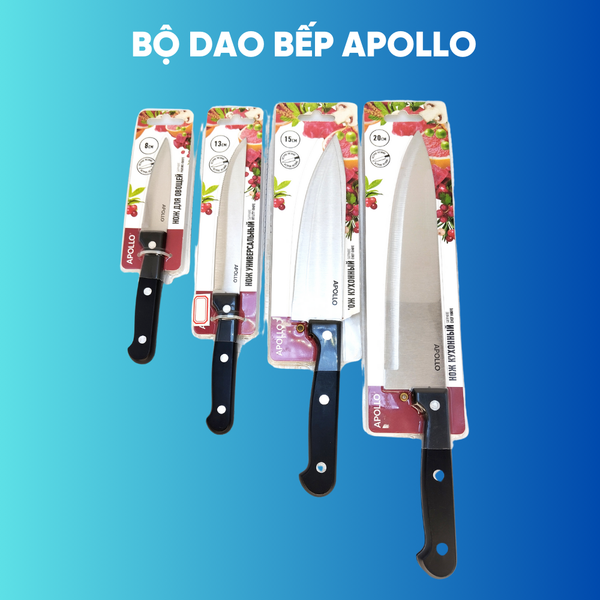
The knife handle, also called the hilt, greatly influences comfort and grip. The handle’s size and length should match your hand and be proportionate to the blade for ease of use.
Choose handles with high grip materials to prevent slipping and ensure safety during use. Carefully inspect the rivets connecting the handle to the blade before buying.
 4. Choose the type of knife that fits your usage needs
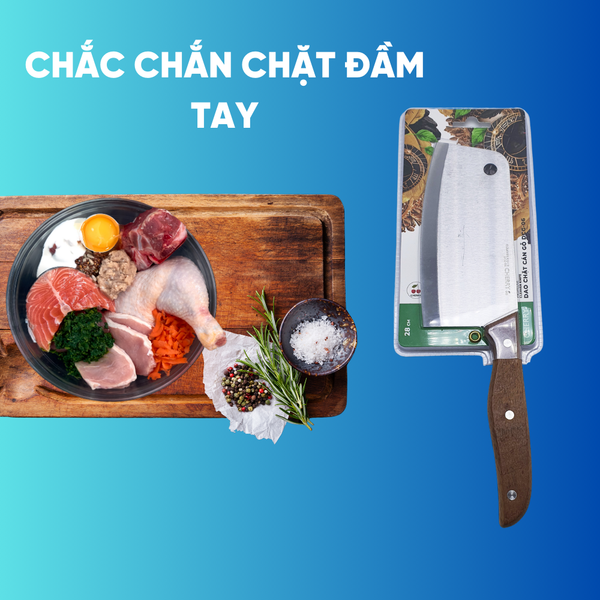
To make food preparation easier and cooking more efficient, choose knives that suit your intended use. Here are some common types:
- Paring knife: For peeling, trimming fruits and vegetables, or mincing garlic and chili.
- Utility knife: A versatile knife for slicing meat, seafood, large vegetables, or even sandwich bread.
- Bread knife: Specifically designed to slice bread and medium-sized vegetables.
- Boning knife: Ideal for removing meat from bones, perfect for grilled or fried dishes.
- Fillet knife: Allows you to fillet fish quickly and easily.
- Cleaver: Great for chopping large cuts of meat and bones.
- French-style knife: Used for decorative food carving and enhancing dish presentation.
5. Buy from reputable brands
With so many kitchen knife brands on the market, be sure to research the product’s origin to ensure quality. Choosing reputable brands with clear origins helps avoid faulty products and gives you peace of mind when using them.
Tin tức khác

Blog
31.10.2025
🎃✨Warm Halloween with Hung Thuy Household Appliances✨🎃
Halloween is not only the season of bright pumpkin smiles 🎃 but also an occasion for us to enjoy a warm family space, where the kitchen lights up with the taste of love. For more than a decade, Hung Thuy has been proud to be an importer and distributor of essential household products – with […]

Useful tip
31.10.2025
Popular types of glass jars today
In modern life, glass jars are not only simple food containers but also contribute to bringing neatness and sophistication to the kitchen space. At Hung Thuy, we are proud to be the official importer and distributor of high-end glass jars from many prestigious brands, diverse in design and function. Below are the most popular types […]

News
31.10.2025
💐Happy Vietnamese Women’s Day 20th October💐
Hung Thuy sends all his love to the gentle half of the world! 20th October – is an occasion for us to stop for a moment, to say thank you to Vietnamese women – mothers, wives, daughters who always silently sacrifice, always give all their love to their families. 💖 In the small kitchen, they […]

Blog
31.10.2025
Types of quality stainless steel food containers hot on the market
Do you want to know about stainless steel food containers? This is a type of food container made from stainless steel, a high-quality, durable and safe material for health. Stainless steel food containers have many advantages and uses as follows: Advantages of stainless steel food boxes: Stainless steel food boxes can withstand high temperatures and […]

News
31.10.2025
Tips for using pans to keep them durable
To use the pan properly, you should heat the pan before use, do not use too much oil when cooking, use silicone or wooden utensils to stir food… Preheat the pan before use Before you start cooking, you should preheat the pan evenly to protect the non-stick coating of the pan. At the same time, […]

News
31.10.2025
What should I do with a newly purchased non-stick pan?
Non-stick pans are no longer strange to every family, or figuratively speaking, non-stick pans are the “right-hand man” of housewives. However, when buying a new pan, not everyone knows how to use and preserve it properly to ensure both health safety and prolong the durability of the product. This article will tell you what to […]
